Tuesday, January 10, 2012

The heat is on...and then not

Welcome to 2012! Hot weather arrived with the new year which meant tending to the veggie patch with a watering can. These hot days were a real contrast to Christmas Day. Areas to the west of Melbourne and the northern suburbs were hit with severe thunderstorms which even spawned a tornado at Fiskville on the way to Ballarat. Belgrave thankfully was spared the damaging hail and torrential rain, however, I feel for those who've had their summer break ruined by nature. Today Melbourne's been lashed by strong cold winds, showers and hail. Summer's taken a break!

Back in the garden the veggies have been powering along. The first batch of cos lettuce is nearly finished and a new crop of seedlings has gone into the ground.  The tomatoes are bearing lots of fruit and picked a ripening San Marzano. Last evening we ate the first lot of beans that went into our traditional bean salad. Delicious!

Being on leave has given me the chance to get stuck into some projects. This week I've begun re-modelling some steps to the backyard. They were little more than tired old sleepers holding back dirt with weeds growing out of then. I've re-levelled the runs and new sleepers will go in along with proper paving. I'll put up a photo when they're done.


Dwarf beans in flower.


San Marzano tomatoes coming along nicely.


Cheers

Wednesday, December 21, 2011

Something old, something blue

Only a few more sleeps until Christmas and doesn't it rush up on you? I'm looking forward to time off work and will be devoting time to the garden. The veggie patch is coming along nicely thanks to a combination of rain and warmth. There's already fruit on the Burke's Backyard and San Marzano tomatoes and I'm hoping we'll be picking the first fruit by the end of January.

For the last few weeks hydrangeas have been blooming in gardens all over the Dandenongs. The cooler climate suits them well. I must admit hydrangeas were never really a favourite of mine and like pelargoniums (more commonly known as a geranium) had that 'nanna plant' image. But looking beyond the reputation of being a little old fashioned these plants look terrific in their prime.


The ones in our garden looked rather sad during the drought years and were burnt to a crisp under the extreme heatwave conditions of February 2009. The plants responded well to some very hard pruning. Last year they came back strong and this year the leaves are lush the blooms large.


Hydrangeas come in whites, blues and pinks and colour is affected by the soil. Acidic soil produces blues, alkaline pink. It's possible to change the colours of the flowers - pink can be turned blue through the addition of aluminium sulfate to the soil. Blue can be turned to pink by adding garden lime. Personally, I'm more a fan of the blue flowers. If you'd like to learn more about hydrangeas follow this link to American hydrangea enthusiast Judith King's website.


It's been more than a year now since the Wikileeks blog commenced and I'd like to thank you for taking an interest, especially the Spain Garden Special, by far a huge hit if the page views are anything to go by! Stand by for some more garden specials in the New Year.


Blue hydrangea.


From the front, Apollo Improved, Grosse Lisse and Burke's Backyard tomato varieties.


Setting fruit on the Burke's Backyard tomatoes.


Left - San Marzano tomatoes.
Middle - bird's eye chilli, capsicum and basil.
Right at front - eggplant.


Cheers.

Friday, November 18, 2011

Going a bit tropo - Melbourne style

After a cool start in the first week of November, it's been very warm and wet of late - perfect conditions for getting the veggie patch going. The tomatoes are coming along nicely and pretty much everything has been planted. Of course this has also meant turbo growth conditions for weeds as well as bringing out lots of slugs and snails. Just got to keep pulling those weeds and the 'beer traps' have been dispatching the slimy critters.

I find the beer trap is a rather effective and safe way of protecting seedlings without resorting to snail bait. I shudder at the thought of one of the cats eating some poisonous pellets and there's the potential effect on birds eating a snail or slug that's taken some bait. I wouldn't want to hurt the magpies and kookaburras that visit our garden as they do a good job of picking off pests during the day.

To make a beer trap simply cut a slot big enough for a snail to get through into a plastic container with a lid. Takeaway and ice cream containers are ideal. Simply pour some beer into the container, put the lid on and set it partially into the ground in the veggie patch. Slugs in particular love beer, they get into the container and drown. Some of my traps have been regularly catching a dozen slugs per evening.

After a pause in the early afternoon the clouds have drifted into the gully and its raining again. It brings to mind images of places like the highlands of Papua New Guinea. Summer is almost here. It's been a great start to the season and I'm optimistic of a bountiful harvest.


Dwarf  beans have taken advantage of the warm and wet conditions - they were poking out of the ground just five days after sowing.


Cheers.

Friday, October 21, 2011

Ceding to the seedling

It's been all action in the veggie patch this week with weeding, digging and tilling the soil. I'm starting a little earlier than I normally would but I've already got tomato seedlings in the ground to take advantage of the warming weather.

You'll recall how I was really pleased with the performance of the 'Apollo' tomatoes last summer. I found a good variety of plants on offer at the nursery on the weekend and decided to give others a try. Of course 'Apollo Improved' were the first in the basket but I also picked up the ever reliable (and tasty) 'Grosse Lisse', an excellent slicing tomato for sandwiches and salads.

In the late 90s in the garden of a Blackburn rental house I gave 'Burke's Backyard' Italian tomato (Costoluto di Marmande) a try and the results were disappointing to say the least. It may have been that it was a cool, wet summer but my thought at the time was I'd never try them again. This time I've thrown caution to the wind and have decided to give them another go. I also picked up 'San Marzano', a compact bushy variety and 'Roma Toms', good for sun-drying and cooking. Oh yes, I got some Lebanese eggplant too.

You may be wondering why I've not raised my tomato plants from seed. Sure they cost a few dollars more than a packet of seed but unless you're planning a large crop I see some real advantages in purchasing them this way:

1. You get to select the exact number of plants you want and don't end up with a still largely full pack of seed, which if you're like me somehow gets lost in a draw and after a few years when you eventually find them again are out of date anyway.

2. No need for spending the time raising and carefully nurturing seedlings. All this work's been done for you.

3. Buying off the shelf you can select the healthiest looking specimens and being around 30 centimetres high you've got a more if a head start for summer.

However, I don't grow all my veggies this way. Some plants prefer being grown from seed in situ, like coriander or spring onion. Others such as green beans and sweetcorn are so easy to raise from seeds planted direct where they are to grow I'd never consider any other way.

It's just the beginning and in the next couple of weeks more things will be going into the ground and then watch them grow.


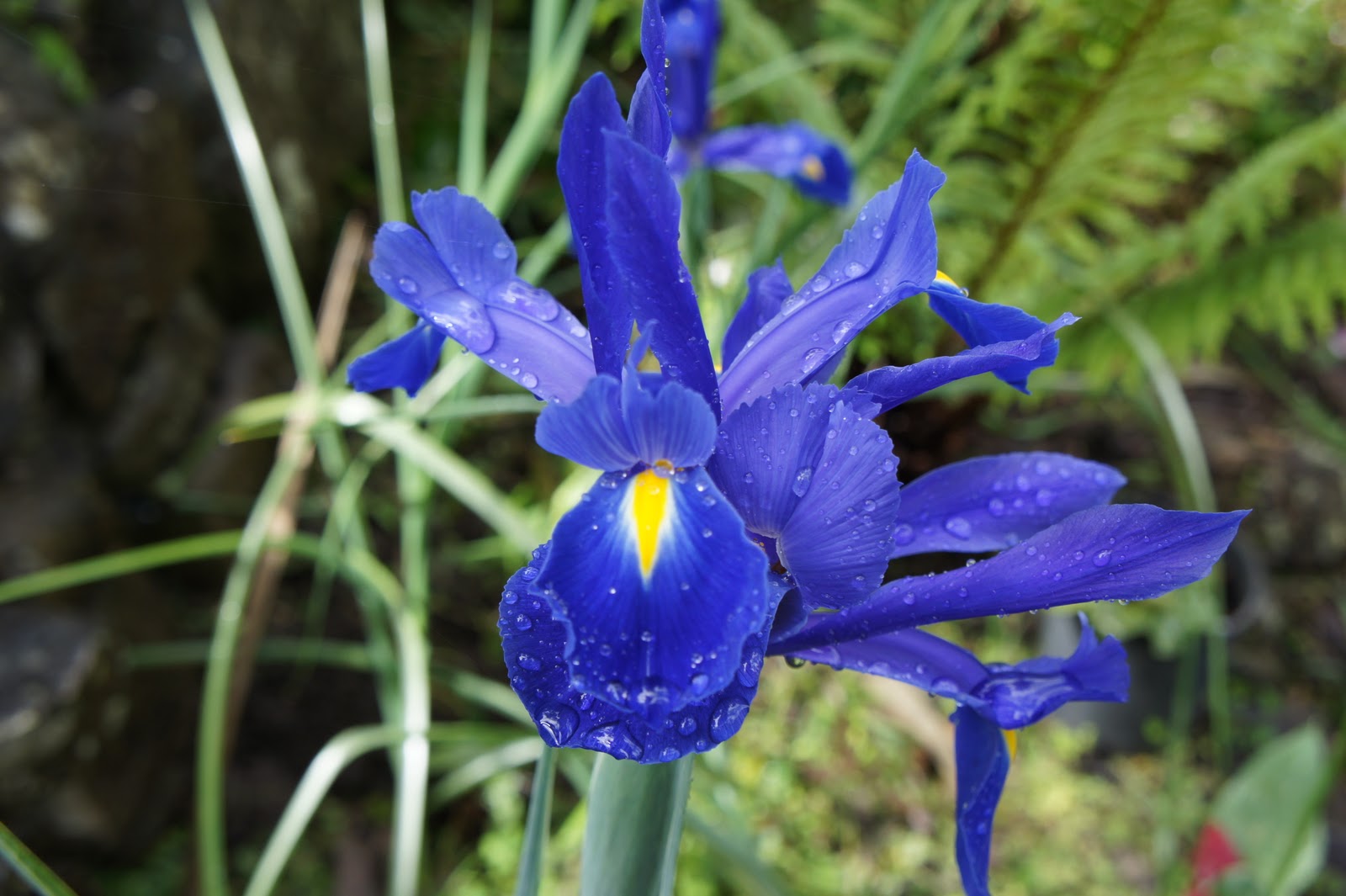
Spring is well advanced in Melbourne. Iris planted in Autumn produced beautiful flowers. How good would these beauties look planted en masse?


The Dicksonia Antarctica tree ferns in the backyard have thrived because of the wet. I love the way the fronds unfurl.


Cheers

Tuesday, September 20, 2011

Going Tropo

Winter in Melbourne is a generally mild affair, no snow or below zero temperatures to contend with. Yet it's still wonderful to get away to somewhere warm and relaxing. I've had the fortune to visit two such places over winter in a short space of time - Noumea, New Caledonia and Darwin, Northern Territory, also known as Australia's 'top end'.

Thinking of the tropics brings to mind beaches, coconut palms, bougainvillea, frangipani and lots of green vegetation. And that's what you get with Noumea and Darwin, or pretty much anywhere tropical for that matter. However, the George Brown Darwin Botanic Gardens really opened my eyes to the diverse variety of tropical plants, both native and imported.

The gardens feature plants from various tropical terrains such as rain forest, savannah and woodlands. It's also right next to Mindil Beach famous for its sunset market every Thursday and Sunday during the dry season. The Fairweather Coastal Walk section of gardens was particularly informative about the uses of indigenous plants by local Aborigines for bush tucker, medicine and for making everyday items like baskets. OK, we're getting into Bear Grylls territory here but without biting the head off a foul tasting grub.

I couldn't think of two better places to visit than Noumea and Darwin, relatively close flying time but so different to Melbourne. Noumea felt like a piece of France transplanted to this island so far away from Europe, relaxed and friendly and the food was sensational. Darwin was laid back and yet surprisingly vibrant for such a small city. I'd love in particular to go back to the top end and spend more time exploring the landscapes there.

Back to reality - Spring is here, so much to do, so little time! I sowed some coriander and also planted out in the garden a small potted rhubarb plant given to me by a work colleague. The Vietnamese hot mint went wild over winter and has been seriously chopped back. There's work to do to get the garden beds ready soon for planting. And I look forward to the warmth I had a taste of in Noumea and Darwin.


Why knock down the palms to make way for the pool when you can have them in the pool? Parc Hotel Noumea.


Ansa Vata Beach Noumea. How could I resist the silhouette of a palm against a tropical sunset?


Government House Darwin.


A neatly clipped hedge of bougainvillea, Government House, Darwin.


Some enormous Mahogany trees in Smith Street 'downtown' Darwin. They were planted as part of a re-vegetation program in the aftermath of Cyclone Tracy which devastated Darwin in December 1974.


A stand of palms, George Brown Botanic Gardens Darwin.


The Darwin Botanic Gardens also has a thriving community garden. Regular vegetables are grown along with tropical fruits. The yellow strappy leafed plants at the front are young pineapples.


Recycling to the max in the community garden. Scarecrow or 'crowbot'? 


Cheers.

Saturday, July 9, 2011

Back into it

It's been a while and I can assure you I haven't been abducted by aliens. Intense study for a graduate certificate has kept me away but it's finished and looking forward to graduating.

In the meantime the summer plants have finished off and it's time for turning over the soil (great exercise) and thinking about what to plant in spring. Apollo tomatoes will be on the list since they performed remarkably well over a challenging summer. We picked the last of the tomatoes in early May, normally they would have finished long before then.

In other developments the downpours of early this year convinced us it was time to replace the ageing roof on the house. We signed up in early April and after many rain delays we got it done just this week. We've gone from a light green to a dark blue, looks great and because the house is on a slope below street level it's the first thing you see of it. The colour blends surprisingly well with the surroundings of the green of the eucalyptus trees. Something to take into consideration, blending the colours of the house with the garden.

Being Winter in Australia now's the time to prune roses. Pruning isn't as difficult as one might think. Roses are tough plants and are particularly forgiving of a hard prune. As a general rule I reduce the plant's size by a third. They put on a lot of growth this year due to the rain and I think I'll cut them back by half.

Here are my tips for pruning roses:

  • Use sharp secateurs and wipe blades with methylated spirits before moving on to the next bush to minimise the potential spread of disease.

  • Make a clean angulated cut about 5mm above an outward facing bud sloping away from it.

  • Thin out inner branches of the rose bush to promote air circulation, important for controlling fungal problems like blackspot in warm humid conditions.

  • Dispose of prunings in the green waste collection or the rubbish bin, not in your compost. As with the secateurs, hygiene is important here. Infected rose clippings in the compost bin could transfer disease and create problems down the track when the compost is spread on garden beds.

The roses will look like thorny sticks coming out of the ground. Spring is not too far away now and before you know it these sticks will be sprouting lush new leaves and the promise of delightful blooms from late October.


Prune roses by making a clean angulated cut above a bud sloping away from it.


 For colour a camellia is a welcome sight on a grey Winter's day.


This potted orchid was given to me by my parents more than a decade ago.  It really delivers a star performance at this time of the year.


Cheers.

Tuesday, March 22, 2011

I Say Tomato

It’s been a long time coming but the tomatoes are ripening all at once and the cupboard is filling up fast - 16 at the latest count. The recent warm spell has done the trick. I love Autumn with its mild days and soft light. Time to plan for winter and spring and my wife has already put some Dutch iris and tulip bulbs into the ground. Cineraria will be going in shortly for some winter colour.

Getting back to the tomatoes, I don’t want to waste any of them. I enjoy them served up as bruschetta, on lightly toasted ciabatta bread with shaved parmesan topped with tomato, a little finely chopped raw red onion, salt pepper and some roughly torn fresh basil drizzled with olive oil. So simple and delicious.

A staple pasta dish I cook is a great way to use up tomatoes and the sauce can be made ahead and frozen for future use. Onion, garlic, dry white wine, salt, cracked black pepper, olive oil, chopped tomatoes and some gentle simmering is all you need to make a lovely sauce base for seafood served up with a pasta of your choice.

Adapted from a spaghetti alle vongole (clams) recipe in an Italian cookbook we own, I use prawns instead of the clams and fettuccine instead of spaghetti. Lots of fresh parsley and basil from the garden is added at the end of cooking to finish the dish.

Try it once and you'll soon find this recipe will become a staple of yours too.


Fettuccine with prawns, tomatoes and white wine.

Ingredients

4 tbsp olive oil
1 brown onion, very finely chopped
2 cloves garlic, very finely chopped
400g chopped home-grown tomatoes*
2/3 cup dry white wine
1 cup of water
300g prawns peeled and de-veined (or substitute seafood of your choice, but heck, you can leave it out and go veg if you like)
Fettuccine (or pasta of your choice)
Good hand full of chopped parsley leaves
Good hand full of fresh basil (sweet, lemon or a combination of the two) roughly torn
Salt and cracked pepper to taste


Method

Heat oil in heavy based saucepan, add onion and gently saute stirring frequently for 3 minutes. Add garlic and saute for an extra 2 minutes.

Stir in tomatoes, wine and water. Add salt and pepper to taste. Bring to the boil, give it a stir and turn the heat low. Cover pan and gently simmer the for 40 minutes stirring occassionally. The original recipe says simmer for 20 minutes but I found the extra time really draws out the flavour of the tomatoes and delicate sweetness of the onion.

In the last 20 minutes of cooking boil water and cook pasta according to packet instructions. Drain pasta when cooked. Raise the heat on the sauce and add prawns, cook until they're done (should only take about 5 minutes).

Stir in parsley and torn basil. Serve with the pasta and a glass of dry white wine.


Some home-grown tomatoes prior to going under the knife.


Cheers.


*This dish works really well with good quality tinned tomatoes too. I prefer Annalisa brand Italian peeled tomatoes.