Tuesday, March 22, 2011

I Say Tomato

It’s been a long time coming but the tomatoes are ripening all at once and the cupboard is filling up fast - 16 at the latest count. The recent warm spell has done the trick. I love Autumn with its mild days and soft light. Time to plan for winter and spring and my wife has already put some Dutch iris and tulip bulbs into the ground. Cineraria will be going in shortly for some winter colour.

Getting back to the tomatoes, I don’t want to waste any of them. I enjoy them served up as bruschetta, on lightly toasted ciabatta bread with shaved parmesan topped with tomato, a little finely chopped raw red onion, salt pepper and some roughly torn fresh basil drizzled with olive oil. So simple and delicious.

A staple pasta dish I cook is a great way to use up tomatoes and the sauce can be made ahead and frozen for future use. Onion, garlic, dry white wine, salt, cracked black pepper, olive oil, chopped tomatoes and some gentle simmering is all you need to make a lovely sauce base for seafood served up with a pasta of your choice.

Adapted from a spaghetti alle vongole (clams) recipe in an Italian cookbook we own, I use prawns instead of the clams and fettuccine instead of spaghetti. Lots of fresh parsley and basil from the garden is added at the end of cooking to finish the dish.

Try it once and you'll soon find this recipe will become a staple of yours too.


Fettuccine with prawns, tomatoes and white wine.

Ingredients

4 tbsp olive oil
1 brown onion, very finely chopped
2 cloves garlic, very finely chopped
400g chopped home-grown tomatoes*
2/3 cup dry white wine
1 cup of water
300g prawns peeled and de-veined (or substitute seafood of your choice, but heck, you can leave it out and go veg if you like)
Fettuccine (or pasta of your choice)
Good hand full of chopped parsley leaves
Good hand full of fresh basil (sweet, lemon or a combination of the two) roughly torn
Salt and cracked pepper to taste


Method

Heat oil in heavy based saucepan, add onion and gently saute stirring frequently for 3 minutes. Add garlic and saute for an extra 2 minutes.

Stir in tomatoes, wine and water. Add salt and pepper to taste. Bring to the boil, give it a stir and turn the heat low. Cover pan and gently simmer the for 40 minutes stirring occassionally. The original recipe says simmer for 20 minutes but I found the extra time really draws out the flavour of the tomatoes and delicate sweetness of the onion.

In the last 20 minutes of cooking boil water and cook pasta according to packet instructions. Drain pasta when cooked. Raise the heat on the sauce and add prawns, cook until they're done (should only take about 5 minutes).

Stir in parsley and torn basil. Serve with the pasta and a glass of dry white wine.


Some home-grown tomatoes prior to going under the knife.


Cheers.


*This dish works really well with good quality tinned tomatoes too. I prefer Annalisa brand Italian peeled tomatoes.

Monday, March 7, 2011

Spain Garden Special

Some time ago I promised a Spain garden special featuring photos from the trip to Europe in late August/September last year. My desire to show these pictures has been spurred on since reading Dee Nolan's wonderful book A Food Lover's Pilgrimage to Santiago de Compostela (published by Penguin, Lantern). I knew I had I had to have this book after hearing Dee Nolan interviewed last year on the 'Dirty Deeds' gardening program on Melbourne independent FM station 3RRR (102.7). Her pilgrimage route took her from Arles in southern France (which I revisited after twenty years) to Santiago de Compostela in north western Spain, not far from the fishing port of Finisterre, thought in medieval times to be at the edge of the world.

The book takes on a number of themes, one of a personal emotional journey for the author but also looks at the importance of caring about what we eat and how food's produced. I find Nolan's approach to food affirms the importance of growing one's own and that's ultimately about having the freshest seasonal produce at hand, food that satisfies body and soul. An edited extract from the book can be found here, from Qantas The Australian Way magazine, December 2010.

Nolan's book focused on green and wet northern Spain and I may not walk the camino but I would really like to sample some of the places on the route. In contrast, our trip took in the sunnier places many would be more familiar with; the vibrant capital Madrid, Granada with its stunning Moorish architecture and buzzy Barcelona by the Mediterranean.  Whilst it was a short trip we took in the time to look at parks and gardens, and the highlight of the whole trip had to be the Alhambra and to see one of the most beautiful gardens in the world, The Generalife.

Here is just a tiny selection of photos (we took heaps). I hope you enjoy and take inspiration from them as I have.


Rose garden, Parque de el Retiro, Madrid.


View of the magnificent Alhambra from the Albaicin, Granada.


On the walk up to the Alhambra.


Blue spikes of salvia, Patio de la Acequia, The Generalife, Granada.


The narrow pool and water spouts adds sparkle to the Patio de la Acequia.


Water spout, The Generalife.


Water is a key feature in the gardens of the Alhambra and The Generalife and an intricate irrigation system keeps its pools and fountains full. The Escalera de Aqua stair bannister doubles as an aqueduct that carries water down hill water to a lower section of the garden. I think I want one!


Near by the Nasrid Palace of the Alhambra.


Court of the Myrtles, Nasrid Palace.


Court of the Myrtles - simply stunning.


A Nasrid Palace courtyard, so cool and inviting on a hot summers day.


I love the incorporation of the greenery in the Font Monumental, Parc de la Ciutadella, Barcelona. Apparently Antonio Gaudi worked on it as an architecture student. He's the man behind the ambitious and yet to be complete Sagrada Familia. Love him - or hate him as George Orwell did - he's left a mark on the city in more ways than one.


You would be forgiven for mistaking this for the entrance of a surrealist's theme park. Not quite, but the entrance to Guadi's Parc Guell, Barcelona. Interestingly, I see elements of the Font Monumental here.


Parc Guell. Love the use of bold strappy plants.


Palms complement the terraces.


Ok, perhaps it is a surrealist's theme park after all.


Cheers.

Monday, February 21, 2011

Now we're getting somewhere

It was showery and cold this morning and starting to feel like autumn, not that we had such a great summer to begin with. There were some warm days during the week and a great looking weekend is coming up. Whether it was from the protestations of last week's blog post or the warmer weather the tomatoes have taken a hint and started ripening at last! Hope to picking some by the end of the week. And my prediction was right, the sweetcorn was ready before the tomatoes, never had that before.

This season I planted the Kelvedon Glory variety. Being an early cropping variety, it's ready a couple of weeks earlier than other varieties such as Supersweet. The cobs are about 15cm long with smallish kernels that are tender and juicy when cooked. Cobs are ready for picking when the 'silks' protruding from the cobs turn brown. I find the best way to eat it is to cook it shortly after harvesting before the sugars in the kernels convert to starch causing the flavour to deteriorate.  This is the only way to eat corn on the cob in my view, a taste preference developed from childhood when my father would pick some corn and straight into the pot it went. Corn that's sat on a supermarket shelf pales in comparison.

To cook, I simply simmer the sweetcorn in water for about 15 minutes and serve with lots of butter and salt. Perhaps not so healthy but delicious, a real late summer/early autumn treat. I will also try out a corn chowder recipe this year, there's quite a few cobs on the plants and want none of it to go to waste.

Now that summer is drawing to close, a reminder to people in the hills to cut down and dispose of agapanthus flowers which are now past their glory and turning to seed. Agapanthus is a feature in many gardens in the Dandenongs, they look particularly good as a massed display or as a border. We have a row running across the front of the property by the road side. A plant originating from southern Africa, it thrives in the hills to the point of being a serious weed in bushland, as the result of illegal dumping of the rhizomes (the fleshy root system) and seed heads in garden waste but also from birds ingesting the seed from the pods and spreading it through their droppings. So people, do your bit and cut down those flowers! For more information the local council  (Shire of Yarra Ranges) website has a section listing major problem weeds in the hills and tips on controlling them including agapanthus. 

Check out some new photos of the veggie patch and the terraced garden project. I must say I'm rather pleased with the way it's going.


Dwarf beans (front), Vietnamese mint (left), capsicum, parsley, sweetcorn and tomatoes (rear).


Sweetcorn, tomatoes, sweet and lemon basil (bottom right).


Kelvedon Glory sweetcorn cobs. The browned off 'silks' protruding from the cobs means they're ready for picking.


Just a faint blush of red, now we're getting somewhere!


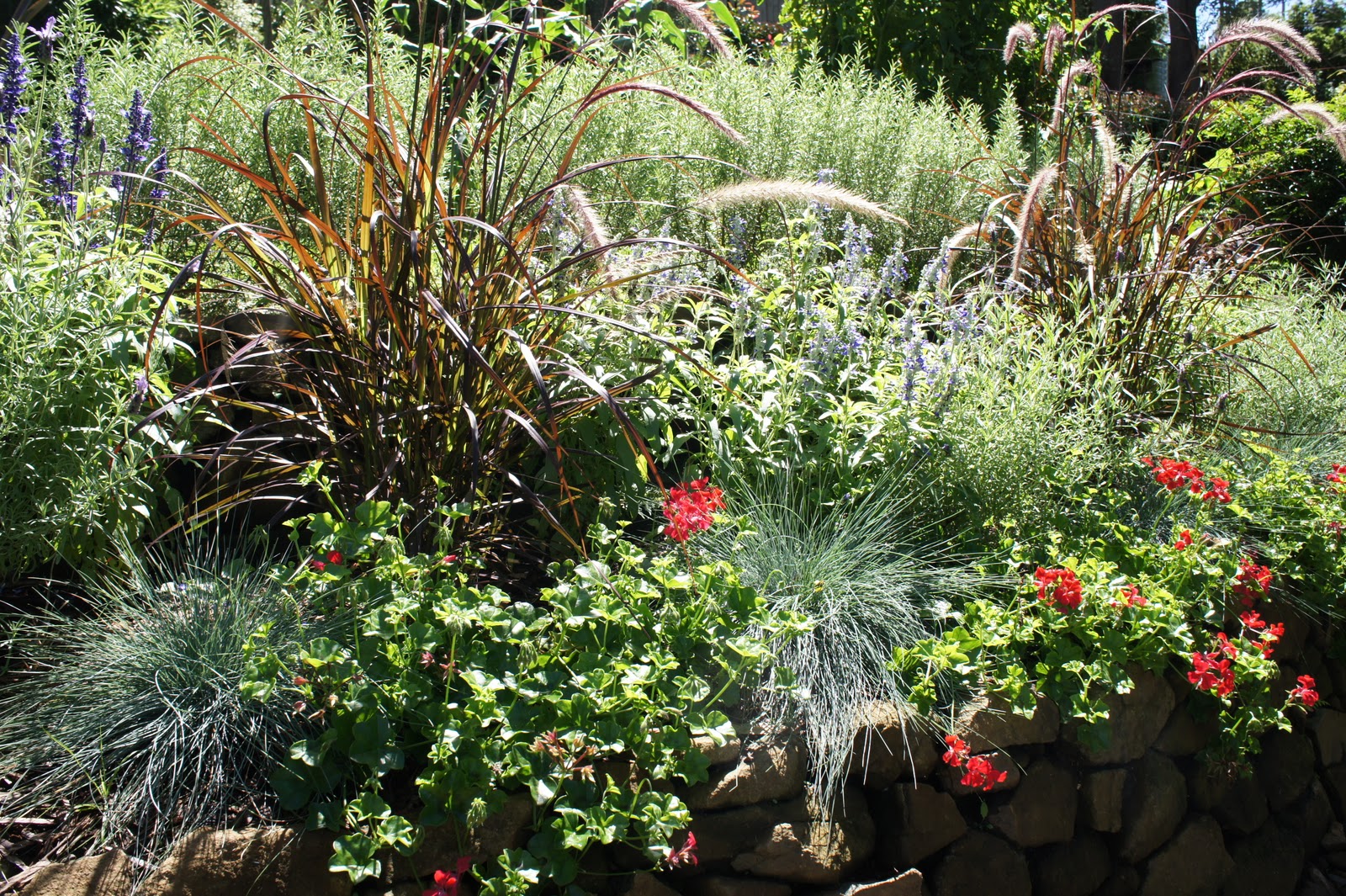
Blue fescue, pelargonium (front), pennisetum, lavender (middle), salvia (rear) and rosemary (top rear) set the scene in the terraced garden.


Cheers.

Monday, February 14, 2011

Patience is a Virtue

After the drama of the 'great flood' of last week it's back to normal around the garden. This meant some weeding around the veggie patch and applying organic fertiliser and the fortnightly application of diluted seaweed and fish emulsion. I felt a bit silly 'watering' the plants considering how damp the soil is after the deluge. The rain this summer has been amazing. In previous years we would have been well into the fire danger period, hot days on end without rain and the grass browned to a crisp. The lush green of now is a far cry from the horror conditions of two years ago that brought Black Saturday and a few weeks later a large fire right here in the neighbourhood that threatened homes in Upwey, Belgrave and Belgrave South.

However, the rain has brought cooler conditions which is great for bushfire safety but not so good for the tomatoes. I planted Apollo tomatoes which I've learnt are an early season variety with fruit that sets in cool conditions. Perfect for the cool nights and mornings in the hills and last year they performed really well. They've have been fruiting for a while now, there are lots on the plants and lots more on the way. But I've yet to see a single one ripen yet - in other years I'd be picking them from mid January. The way they're going we'll be eating the sweetcorn before the tommies. On the other hand, I 'm hoping the long maturation period will deliver superior fruit in quality and flavour then patience will be truly rewarded!

Meanwhile, I'm already thinking about giving some other tomato varieties a go this spring. On the web I came across the Greenfingers site that has a comprehensive list of tomato varieties. So many to choose from, but give me a home grown tommie anytime, even if I have to wait!

Cheers.

Saturday, February 5, 2011

Wikileeks - leaks edition

Not a great weekend for gardening after last night's and this morning's massive downpours courtesy of ex-tropical cyclones Anthony and Yasi. Who would have thought weather systems in the far north of the continent could have such an impact here in Victoria? Large areas of the state have had a drenching. Mildura has had record rainfall - usually bakes under 40+ degree heat day after day at this time of year. As I write Koo Wee Rup residents are being advised to evacuate due to rising waters of the Lower Bunyip River.

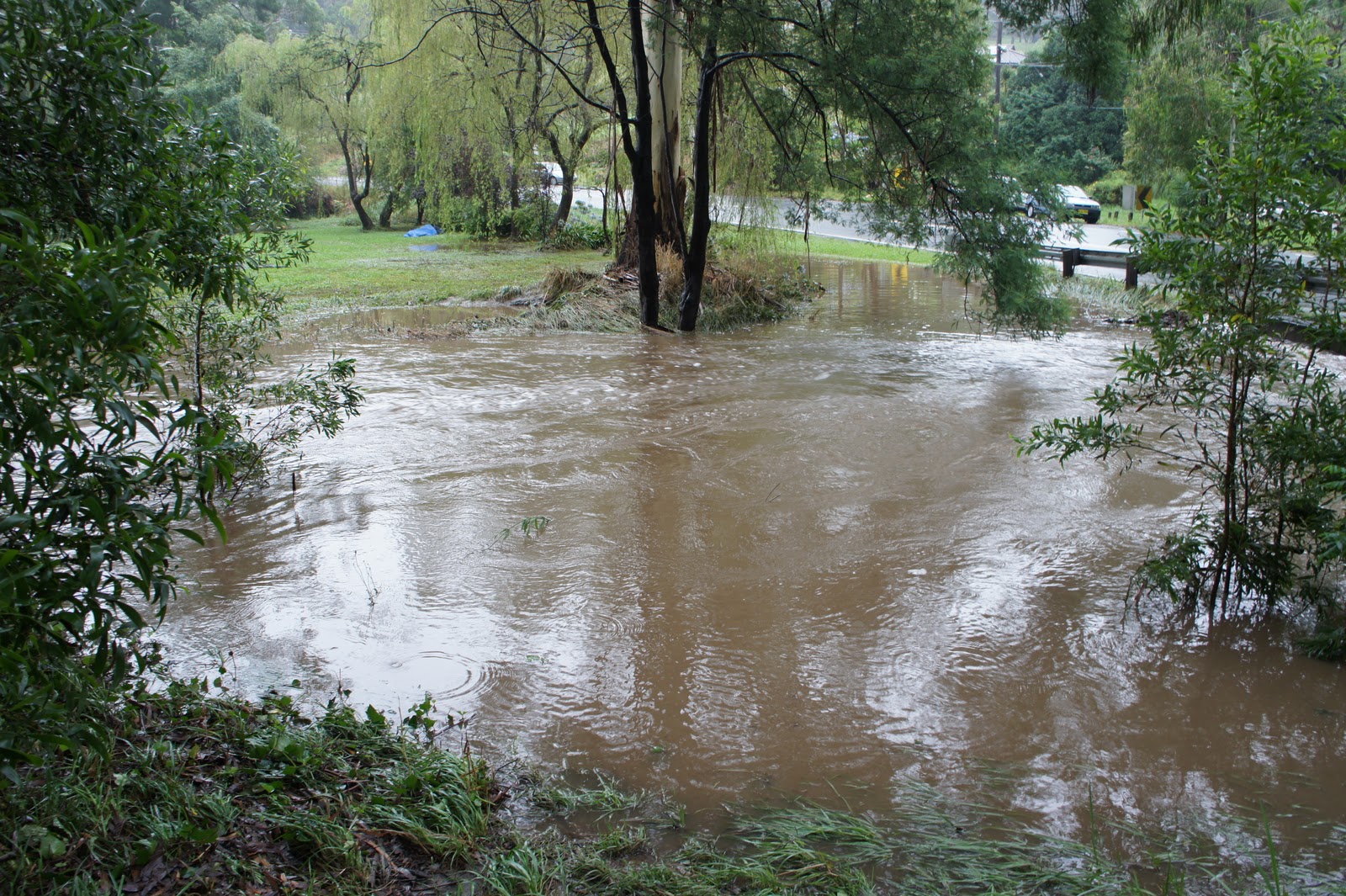
The hills around Belgrave and the south east suburbs of Melbourne were hit pretty hard. The Dunns Hill weather bureau station not far from here recorded 150mm in 14 hours, must be some kind of record. The house did have a couple of leaks in the kitchen and dining area but thankfully nothing serious. The garden is soaked but everything looks fine. Stepping out on the deck this morning after the rain stopped I could hear the sound of water coming from the bottom of the gully. It was Monbulk Creek in flood. Usually it's just a small creek, no more than 2m wide in most places. But today I could actually see the waters flowing past the  Christian College. First time ever.

With nothing better to do my wife and I grabbed a camera and headed off to have a bit of a sticky beak...


Monbulk Creek in flood at McNicol Rd, Birdsland Reserve, Belgrave.


Old man Monbulk Creek.


Birdsland Reserve.


Kaola St landslip.


Wife contemplates crossing bridge. Monbulk Creek at Belgrave Lake Park.


Park bench that bore the brunt of flood water.


Belgrave Lake Park weir overflow.


Flood damage downstream of Belgrave Lake Park.


This was a footbridge, smashed by flood.


Just goes to show what nature can do and we're not immune to its effects even from events so far away.

Cheers.

Monday, January 31, 2011

Beanz Meanz Deliciouz

Okay, okay, crappy title but we've savoured the first harvests of fresh dwarf green beans. They're usually the first proper crop to be ready for the picking but this also means the first of the ripe tomatoes aren't too far away - hopefully helped along by some hot weather this week. The sweetcorn is tall and healthy ears are forming. Have picked a couple more Lebanese cucumbers and there's loads more of them to come.

All in all I'm very pleased with the progress of the veggie patch. As I mentioned its been a little hot making some watering necessary, something I haven't had to do much this year. Even though the city dams are filling I try to use as little water as possible.  The veggie patch isn't too big so I hand water with a watering can. Sure it's a bit of work but it's the best way to get water directly to the base of the plant. Using a hose is quicker, however there's always going to be wastage from the overspray. Watering in the early morning or evening allows for the moisture to seep into the soil so it gets down deep to the roots. Personally, I prefer watering in the mornings. Evening watering can result in damp foliage that will dry off slowly overnight creating conditions for fungal problems to take hold, particularly for tomatoes.

Back to the beans. I'd like to share with you a recipe for an East Prussian bean salad that's been handed down in my wife's family. It's simple and about the best bean salad you could ever try (in my opinion anyway). The key ingredient to the dish apart from the beans of course is German Speck, not to be confused with Italian speck which is more like prosciutto. It's cured and smoked pork fat, lard basically and is very similar to Italian lardo. I think of it as extreme streaky bacon - all streak, no bacon! You should be able to find it at good delis. Closer to home my wife gets it at Pete 'N' Rosies deli at the Box Hill Market, Victoria. 


German Speck - all streak, no bacon!


Warm green bean salad with Speck.

  • 250g freshly picked green beans, topped and tailed sliced into halves or thirds depending on length.
  • 50g German Speck cut into small dice.
  • Half small onion finely diced.
  • One tablespoon (or two according to taste) of balsamic vinegar or any other vinegar you prefer.
  • Salt and cracked black pepper to taste.

Bring a pot of salted water to the boil, add the sliced beans and boil for 15 minutes or until tender. Drain beans in a colander, briefly refresh with cold water. Add beans to a serving bowl with the onion, vinegar, salt and pepper.

In a frying pan melt the speck on medium heat. Cook gently until the remaining solids of the speck start to brown and turn crispy, at this point the speck will give off a little smoke. Pour the speck over the beans and other ingredients in bowl and toss. Serve warm.

Excellent with barbecued steak and a lovely glass of shiraz.


Cheers!

Saturday, January 22, 2011

Too much of a good thing?

Since my last posting I think we've all been knocked sideways by the scale of disaster that hit south east Queensland nearly two weeks ago, the killer 'inland tsunami' that literally swept towns away in the Lockyer Valley to the inevitable flooding of Brisbane suburbs by the river. The weather system that caused all this destruction has affected the entire eastern seaboard bringing high humidity and record flooding rain to northern New South Wales, northern and western Victoria (an area previously hit hard by more than a decade of drought) and Tasmania. Alas, that's nature - were it brings destruction it also gives life.

The rain bucketed down here for two days in Belgrave and a week of warmth and high humidity triggered a massive burst of growth in the veggie patch. The first cucumber has been picked, the first harvest of dwarf green beans a day away. The tomatoes have started fruiting but it'll be a long way off before they're ready. It's great to see rain this far into January and it's keeping the risk of bush fires at bay, yet it can bring fungal problems like black spot to plants. It's a relief that some warm dry weather has arrived with light showers next week.

Planted another batch of regular cos lettuce and some mini cos too. I planted out a pot of rocket, looks like rabbit food but it's considered a herb. I must admit I never used to be a fan of rocket until I tried it teamed up with other things, most notably the wonderful fried calamari with aioli and rocket at Reel Cafe, 1628 Burwood Highway, (next door to the local institution Cameo Cinemas) here in Belgrave. So, I'll give it a go growing it in the garden and look forward to trying it out in ... well whatever really!

There's not a lot else to do in the veggie patch at the moment apart from a bit of weeding and an application of an organic solution of seaweed and fish emulsion via the watering can which always seems to give the plants a real boost.

Please take the time to have look at the photos below, you'll agree there's been a big change in a short time. And what about that spider? Beats me what that one is, but I'm sure it's doing its bit for the garden.


Before (dwarf beans, Vietnamese mint, sweet corn, parsley and tomatoes)  about 3 weeks ago.


After (like this morning).


Apollo variety tomatoes beginning to fruit.


Guardian of the potted mint.


Parsley, sweetcorn, basil (sweet and lemon), tomatoes.


Cheers.